The Odyssey
A Meandering Modern Mess & Sign of the Times

I’ll start by apologizing for sitting on this much longer than usual. I know everyone is anxiously awaiting to hear my latest excuse so let me get that out of the way: I’ve never worked on a review where the conversation about a movie mattered as much, if not more than, the movie itself. And figuring out where a nuanced take could still fit in, after the internet had already beaten this dead (Trojan, if I may) horse for engagement before most people had time to digest their popcorn, took much longer than watching the film twice over. Folding in the cultural commentary is a new venture for me, but I think you will see I discovered the missing thread that makes this a worthwhile read.
Two very different crowds have spent the last few weeks discussing Christopher Nolan’s The Odyssey, and I felt that neither actually touched on the essence of the movie. Audiences and mainstream critics gave it the kind of unanimous, unending “masterpiece” praise that shows up whenever Nolan hits IMAX and that should rightly make you suspicious. Meanwhile a huge chunk of the online right spent two weeks becoming classicists. Suddenly everyone had opinions about Bronze Age ship construction and how the armor or Trojan horse actually looked. It’s a strange thing to witness, because most of these same people could not have told you most of the characters’ names a month ago, and most of them are not qualified to speak on anything pertaining to the arts. Yet, they insist that they are here to provide the public with some much needed scholarship that has been missing until they arrived to save the day. Anti-woke cultural commentary is its own industry at this point, and the new business model runs on there being a fresh grievance every month by scouting for anything that looks like the latest evidence of civilizational decline. It’s a commendable racket precisely because it never has to be innovative, or original, or offer anything resembling a way forward. Calling it “anachronistic” is generous, like the failure is a scholarly one. It’s essentially just their newest commentary to remind people they are serious people in the public sphere and should be taken seriously because the newest thing doesn’t meet their standards. All of which just masks the fact they are producing nothing of value themselves. This is something that I see is endemic to the right wing at large nowadays and why this “review” has taken so long because I quickly saw it unfold as more of an indictment of the right’s place in culture while simultaneously using my own critiques to chart some new path if the right ever wants to be taken seriously in the public sphere again.
There is a glaring omission from both readings and it’s the part that actually makes this a Nolan movie that should be taken seriously: the debate surrounding this movie was not an unintended error. Greek myth was never a text you sat with in isolation. It was communal, it was contested, every city-state and every poet had their own version, and it was meant to elicit controversy. A movie that two ideologically opposed audiences are using as a proxy for an entirely different fight about the West is doing something closer to what myth actually does than a quiet, unanimous consensus movie ever could. I noticed I liked the film more the longer I read and watched discourse around it than I did leaving the theater. That might be the most honestly mythological thing about it.
What the Critics Missed
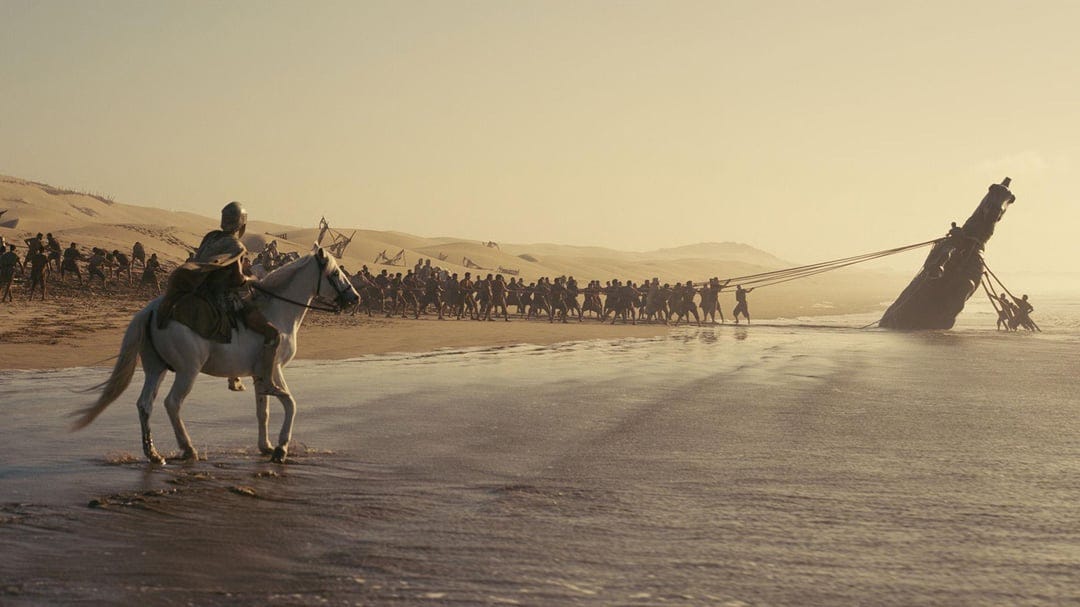
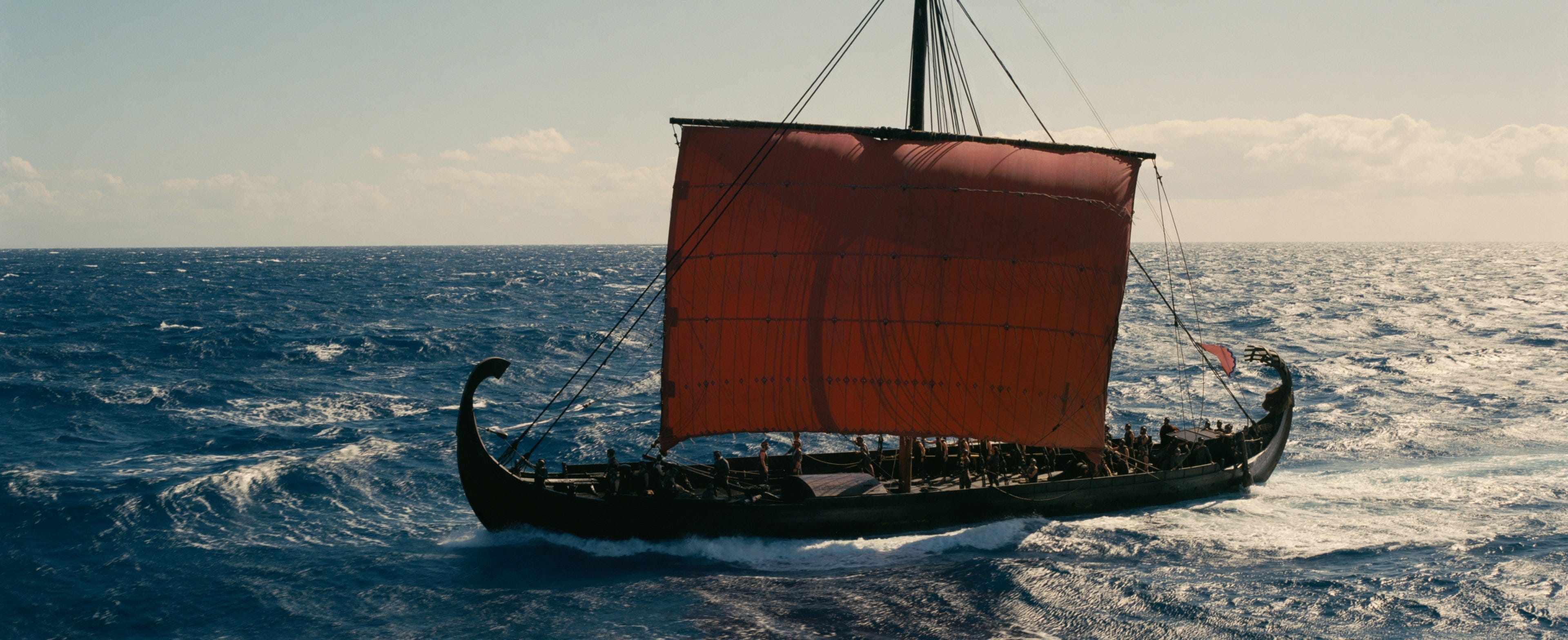
At this point, I think everyone agrees that “he abandoned historical accuracy!!!!” It’s true, and Nolan has said as much. Nolan’s Greeks sail a literal Viking longship across the Mediterranean. The armor makes no sense for its time. The Trojan Horse has no wheels. And Helen is BLACK. All valid criticisms if Nolan himself hadn’t invoked that this movie is a modern twist with a focus on grounded realism. Is it a cop out in-and-of itself? Perhaps. But it is precisely why I am approaching this review from a new angle, because the director asked us to meet him where he’s at.
I’ll admit some of my dissatisfaction here isn’t really about this movie specifically. I’m reflexively skeptical of most mainstream anti-woke art criticism on principle, because as a tendency it has never produced anything of artistic consequence and shows no sign of starting now. It doesn’t function like a coherent critical standard or principled historicism so much as a mask: hand out a purity test about historical fidelity when it’s politically expedient instead of providing any actual commentary on the art and its themes. Most of these people are larping as classicists to score points against one of the greatest directors (and by proxy liberals) of our time who is actually trying to create something of value.
There’s a version of the counter-argument raised by Michael Knowles (in what has probably been his greatest attempt at independent thought) types that’s worth engaging seriously. The claim is that Nolan weaponized the discomfort of modern casting expectations, using progressive casting as cover to smuggle an authentically conservative story that would never greenlight it pitched plainly. There’s some evidence for it. The film’s one visibly, textually “native” Greek villager appears alone, pillaged by his own countrymen, terrified they might be the legendary Sea Peoples, the marauders history blames for helping collapse the Bronze Age world. The Indian man who answers him, in English, is a “Greek from Ithaca”. It’s (accidentally or not) a clever piece of misdirection: the exact multiethnic army half the internet was furious about is the film’s own stand-in for foreigners who wreck civilizations, not its heroes. Whatever bothered you about that army’s makeup, the movie already agrees a foreign force is bad news. I don’t mind that take but it asks you to believe Nolan is playing four-dimensional chess with a nine-figure budget and a studio he answers to, pulling off an elaborate, Odyssian trick on everyone. The more mundane explanation is also the more interesting one: some of this ambiguity is just what happens when a serious filmmaker tries to tell a serious story inside an ideologically driven industry now optimized for ROI. A movie can end up structurally undecided about half its own choices without anyone running a secret master plan and I think that mundane explanation ends up mattering more than the clever one by the time we get to the back half of this piece.
The casting of Ellen Page as Sinon is the clearest example for how little the “secret message” take needs to be true. At face value, casting a trans actor as a doomed conscript reads exactly like the thing the anti-woke crowd wants it to read as — a DEI checkbox. But inside the plot logic of the film, Sinon is the weak substitute forced to stand in for Antinous, the lead suitor who drew the lot for war and manipulated a shepherd boy into taking his place. When Odysseus finally meets Sinon’s ghost in the underworld, he calls him the bravest man he fought beside, precisely because he stepped into a role built for someone else, a role a stronger, richer man refused. Sinon’s dying request isn’t vengeance on Troy. It’s that Antinous be made to feel the shame he ran from. The scene is really about cowardice needing somewhere to land, Sinon becomes the place all of that gets dumped, whether he’s equipped to carry it or not. I see that as the tragedy the casting is depicting.
There’s a subtler, more poignant parallel worth noting too, in how the film draws Penelope against Circe. This Circe has a supposed reason to fear armed men. She’s watched what soldiers like these have done, but her fear grows into her own kind of tyranny. She not only turns the soldiers into pigs, she also turns her own sister into a crow, using her feminist victimhood as license to control everyone in reach, rendering her sister and herself lonely and miserable. Penelope’s grip on Telemachus, keeping a grown-if-untested son boxed in under the banner of protecting the household, plays out like a domesticated version of the same instinct. I doubt the film is drawing that parallel for no reason at all. Nolan is clearly interested in what a victimhood mentality and absolute control does to a person regardless of who’s holding it, which is a more honest recognition of his tendency to moralize through interrogating both sides and their propensity to do harm when left to their own devices.
And the ending is what actually undoes the “hero destruction” critique, more than any counter-theory. A big part of the anti-woke complaint is that Nolan softens Telemachus, that instead of the boy who, in the text, silences his own mother and sends her back to her loom in one of the first recorded instances of a man putting a woman in her place in Western literature, we get a kid who has to plead with Penelope, who hides behind doors, who whimpers that he’s a man now. Sure. That’s a noteworthy change. But then the movie ends (roughly, inb4 fact-checkers) the way the poem does. Odysseus comes home to his loyal wife and kills every suitor in the house. Telemachus gets handed the kingdom. Bloodline and hierarchy get restored, violently. And then he sets off to rebuild again. The complaint has to hold two things at once that don’t fit together: that the film is soft on patriarchal/masculine authority, and that the film ends with that same authority reasserting itself through force.
The Emily Wilson Wrinkle
Conveniently, the internet was fed more fuel yesterday to keep the conversation going. Emily Wilson, the classicist whose 2018 translation the anti-woke crowd spent months blaming for every supposedly feminist fingerprint on this film — and who Nolan is now rumored, despite his own insistence that he worked from a stack of different translations, to have leaned on harder than any single other source — gave an interview, and it seemed to vindicate the anti-woke right.
The interpretation making the rounds is that Wilson thinks the film is too progressive even for her, some kind of progressive feminist eating her own. I don’t think that’s what she actually said. Paraphrased fairly, her complaint is that Nolan’s Odysseus feels bad about what he did in the war and works through it in a distinctly modern, psychiatrized register, chemically assisted by way of the lotus. She wanted to see him wanting glory: hungry for spoils, hungry for a sacked city’s plunder, indifferent to the cost. Regrettably, she got something closer to a likeable, all-American leading man than a warrior greedy for kleos. Her verdict, in her own words, is that the film has plenty of interest in shame and “no interest in glory.”
That was the final piece I needed to put this whole picture together for you, my high-IQ cinephile, because it inverts the entire premise the anti-woke crowd built their outrage on. The complaint from the right has been that Wilson’s translation smuggled a soft, guilt-ridden, therapized Odysseus into the culture, and that Nolan simply filmed her revisionism. Here’s the actual translator, on the record, arguing the film undersold the character’s appetite for violence and plunder and overcorrected into sympathy. If her fingerprints really are all over this script, they’re apparently pointing the opposite direction from the one everyone assumed.
There’s something worth sitting with in what the complaint reveals about her own politics, separate from whether she’s right about the film. A scholar who built a career reframing Homer’s hero and his women arrives at the end of a supposed blockbuster adaptation of her work and objects, essentially, that the hero got to feel bad, medicated himself to cope, and never got his comeuppance. It reeks of contempt for a man being handed sanctification in lieu of judgment, the same instinct, from the opposite direction, that put the anti-woke crowd through two hours of asking why he feels guilty at all. Both sides, it turns out, wanted a version of this story where the hero doesn’t get to (nor should he need to) process anything.
I arrived somewhere else entirely, and I think the film does too. Odysseus does numb himself, and it does look pharmaceutical, and it is a very of-this-decade way to handle trauma on screen. But he doesn’t stay numbed, which is the part Wilson’s complaint seems to skip past. He wakes up. He goes back to the business of spoils, lineage, and a hall full of dead suitors, exactly the business Homer’s Odysseus was always in. Wilson wanted a man who never laments. The anti-woke crowd wanted a man who never should have lamented in the first place. What’s actually on screen is a man who laments, medicates, and picks up the bow anyway, which sounds a great deal like glory to me.
Odysseus Is A Nobody
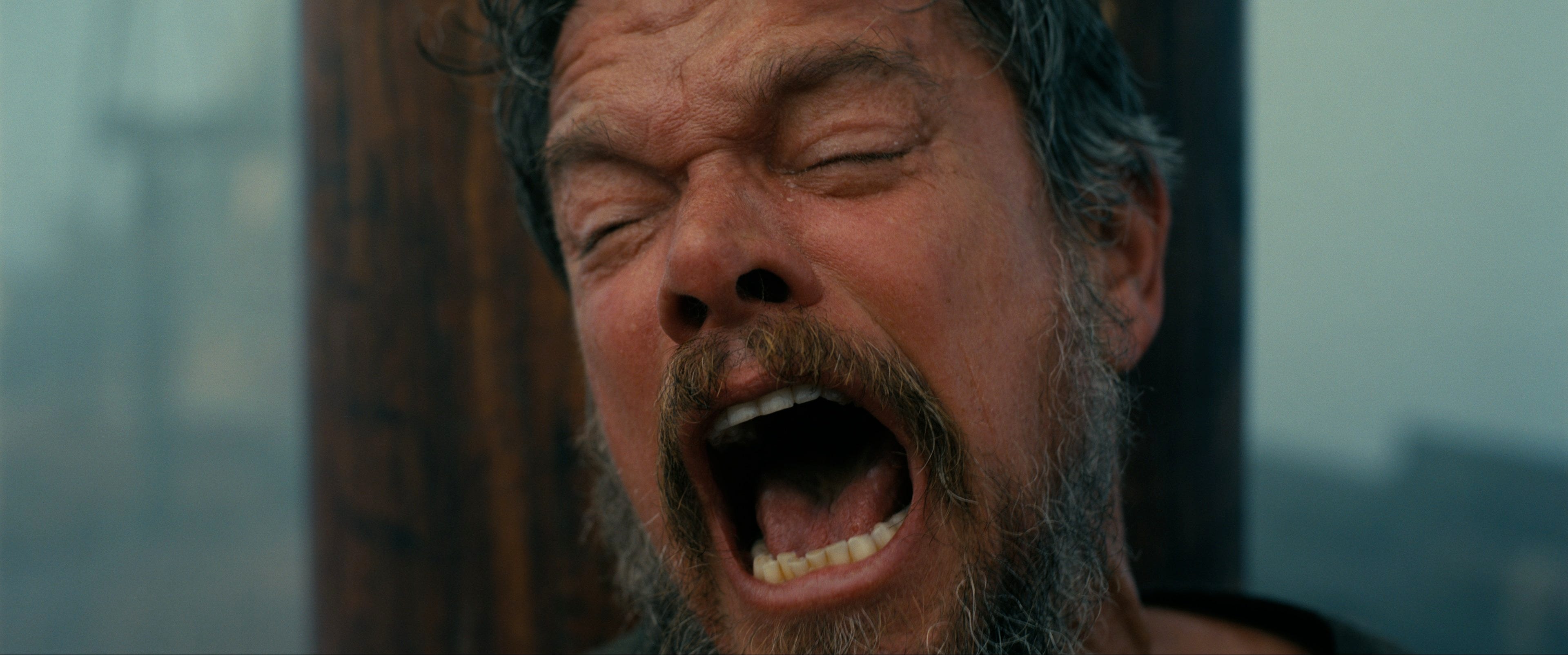
An oft-repeated complaint, even from people who aren’t coming at this from the anti-woke angle, is that Nolan cuts Odysseus’s iconic lines, specifically the declaration to the Cyclops — the moment where, having just blinded Polyphemus while calling himself “Nobody,” he can’t resist screaming his name and his father’s name into the dark, purely for the glory of it. It’s the ultimate flex, the birth of his own myth in real time, and it’s gone from this movie. People interpreted that as negligence on Nolan’s part, or as evidence he doesn’t understand what makes Odysseus Odysseus.
The casting tells a different story. Matt Damon is, by design, the least “somebody” A-list actor working. Go back through his filmography: Ripley, Will Hunting, the astronaut in Interstellar, the Lieutenant in Oppenheimer. The throughline is the opposite of range. He plays the competent, unglamorous middleman better than almost anyone alive, the guy you could believe is standing next to you waiting to get CAVA. That’s not necessarily a knock. It’s an extremely specific and hard-to-fake skill, and it’s exactly the type of man Nolan wanted here. You don’t cast the most reliable “nobody” actor in America and then have him scream his own name into a cave for the glory of it. That would be a different, older kind of hero, one built on kleos, on being remembered, on the hubris of needing the world to know your name. A modern, post-Christian audience recognizes itself in a nobody far more easily than in a mythic hero demanding to be remembered. Cutting the boast is the most legible piece of the whole casting logic, and it’s a shame nobody’s arguing about it, because it’s a better argument than anything either side has actually made.
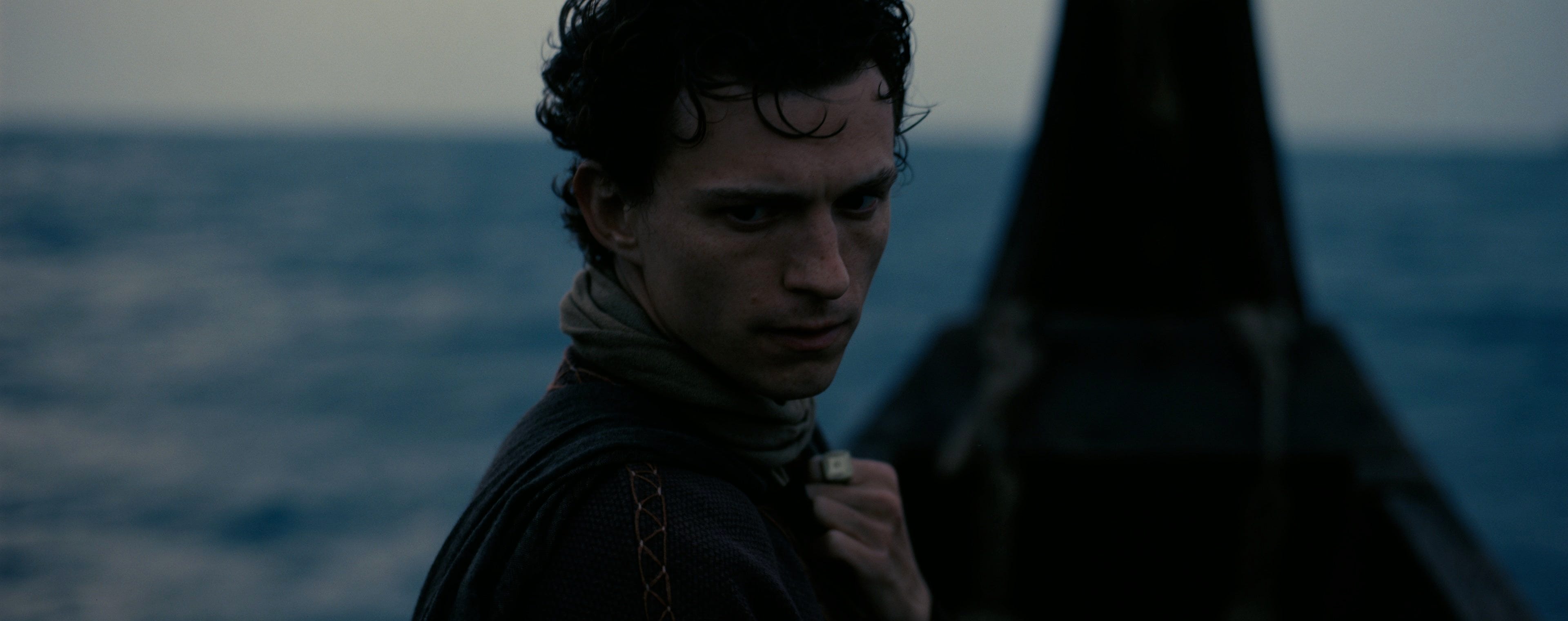
Wake up, White man
Backtrack to the ending for a second, because this is where everything the film seeded earlier actually detonates. Disguised back in Ithaca, Odysseus confesses to Penelope that the Trojan Horse, his masterful trick that actually ended the war, was itself a violation of the same law he’s about to enforce on the suitors: Greeks and Trojans alike worshipped Athena, and he weaponized that shared devotion to get his men through the gates. As he says it, the film cuts to the sack itself, a stone Athena statue in Troy loses its head in the same instant an innocent civilian, played by the same Zendaya who is depicted as Athena throughout the film, is slaughtered in front of him. We learn that every “goddess” sighting up to that point wasn’t a vision, but a recurring image of a death he witnessed and was processing, replaying itself on a loop we mistook for divinity. He associated a woman’s death at Troy with divine judgment the instant it happened, and it never stopped following him. He isn’t punished in this telling for fighting badly. He’s confronted with the reality of what it took for him to win completely.
That apparition is his open wound. The lotus, and the foid Calypso, is him medicating it and avoiding responsibility instead of accepting and moving on.
And this is where I think a lot of takes on this movie, including some of the more sympathetic ones, go soft in a way the material doesn’t actually ask for. This isn’t a story about a man who owes the rest of his life to permanent, structural guilt over what his side did in a war. War produces horror. It always has, and pretending a returning warlord ought to walk around forever hollowed out by that fact is its own kind of dishonesty — a modern, therapeutic instinct dressed up as moral superiority. What actually happens to Odysseus is simpler and more useful than that. He takes on actual trauma from what he did and saw, numbs it for a while the way anyone would, with a drug, with a woman, with forgetting, and then wakes up. He comes to his senses, gets off the island, and finishes the job he owes the people waiting for him: getting home and putting his own house back in order. Reading the whole arc as a referendum on civilizational guilt gives Nolan too much credit as a moralizer and not enough as a dramatist. What he’s actually doing is more old-fashioned: showing a king humbled and sanctified, a man who freezes, who numbs, who lies, who fails as often as he triumphs, without turning any of that humanity into an indictment of what he ultimately goes back to do (an arguably Catholic interpretation, if I might add). Odysseus doesn’t end the third act by apologizing. He picks up a bow, and the movie seems to suggest that the ugliness of war never actually cancelled out the legitimacy of defending his own home in the first place.
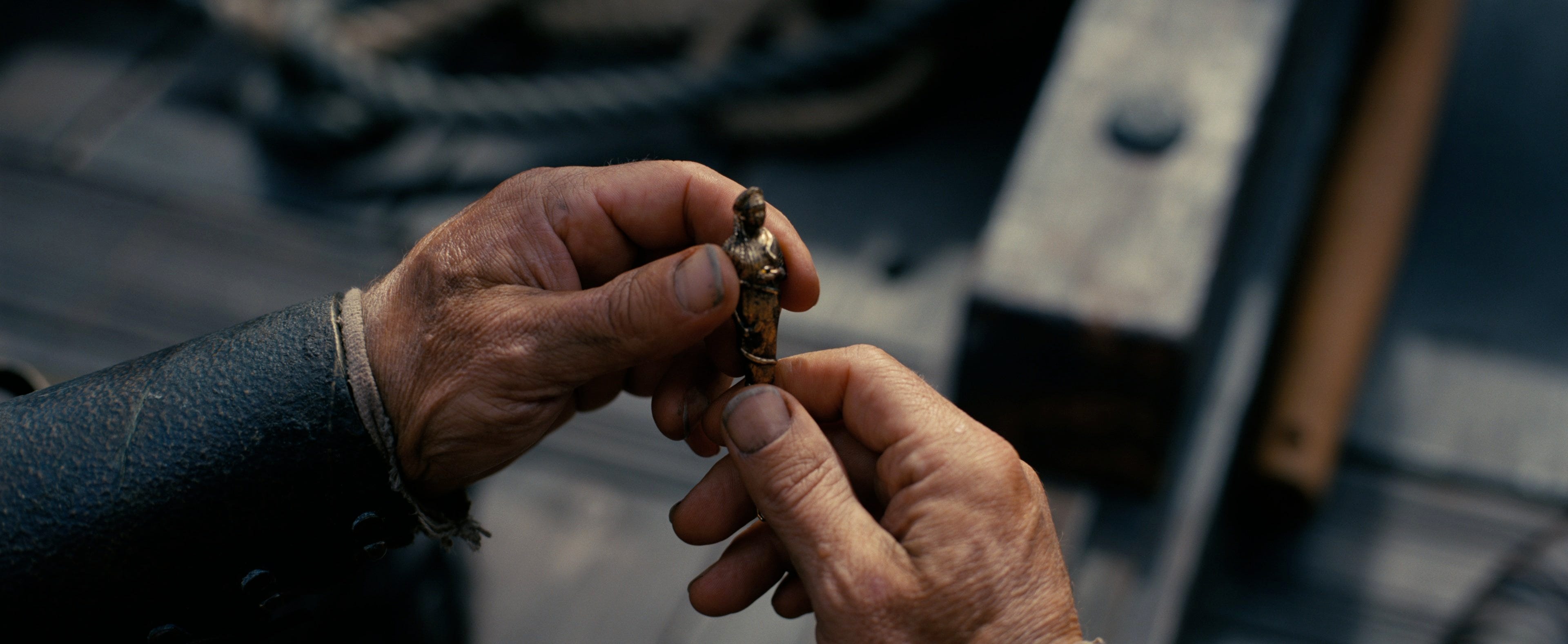
Modern Morality
There’s a specific moral engine driving a lot of this, and it’s worth addressing: Zeus’s law. The film leans on it constantly. A Bronze Age gloss on the Golden Rule, the idea that a stranger at your door might be a god in disguise, so hospitality isn’t so much an optional courtesy but a cosmic liability. Homer gestures at guest-right, sure, but nothing like this insistently or this structurally. Nolan builds an entire moral architecture around it: the suitors are guilty because they abuse a host’s welcome, parasites dressed up as guests. Then, in the film’s best structural swing, he applies the identical law to his own hero. Disguised in his own hall, Odysseus confesses to Penelope that the Trojan Horse was itself a violation of that same law. Greeks and Trojans both worshipped Athena, and he weaponized their shared devotion to get his men
through the gates. A Homeric audience wouldn’t have scored that move this way. Homeric ethics run on kleos and tribal loyalty. A trick that wins your side the war is glory, full stop, regardless of what it costs the other side. Judging your own triumph by the same impartial standard you’d apply to an enemy is a much newer idea, and it isn’t a Greek one.
It’s a Catholic one, or close enough to pass. Nolan has said outright that Christianity shows up in his films less as theology and more as inheritance from his own upbringing — “ideas of Christianity sort of float around in there,” as he puts it — the residue of a Catholic childhood as opposed to a message he’s smuggling consciously. Zeus’s law behaving like a universal, impartial standard rather than the capricious, tribal favoritism of the actual Olympian pantheon is exactly that kind of residue: a Bronze Age myth wearing a post-Christian conscience, whether or not Nolan intended the costume.
None of this turns the film into a guilt trip, and that distinction matters. Confession here functions the way it’s supposed to in the tradition Nolan absorbed growing up. Odysseus confesses what the horse actually cost, and then he still picks up a bow and finishes the job waiting for him at home. A Catholic moral architecture was never really about wallowing forever in what you did. It was about naming it honestly and getting back to work, which is the exact strip this film runs on, whether or not Nolan would ever put it in those terms himself.
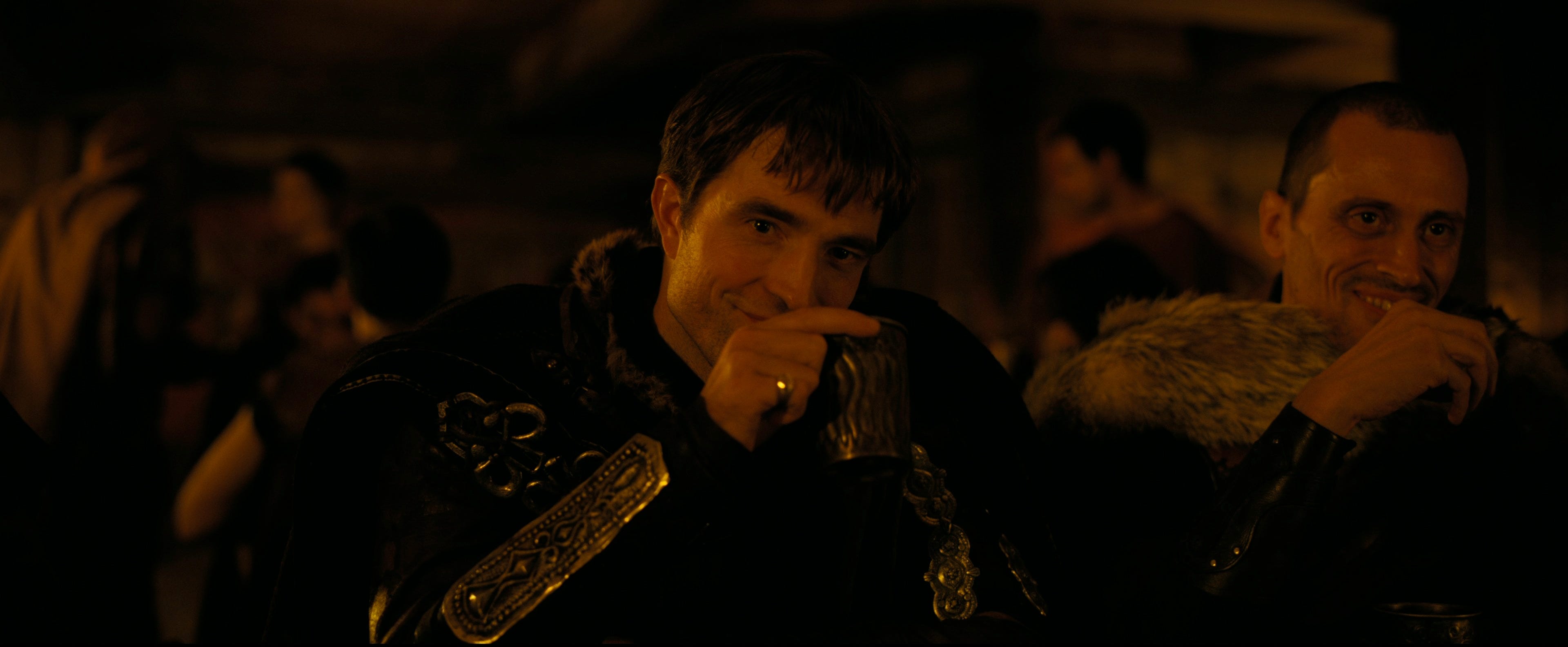
Credit Where It’s Due
I want to be honest about how I feel about this movie, because I think it adds weight to the discourse in a more useful way than picking a side does. I didn’t mind the diversity of the cast, and I rarely do, when the movie earns it. And for all its flaws, I think this one does, because that’s just who Nolan is as a filmmaker. I enjoyed watching it. I don’t think it’s great. I think it’s good, with real problems, and I wouldn’t be shocked if a third viewing moves me somewhere between those two.
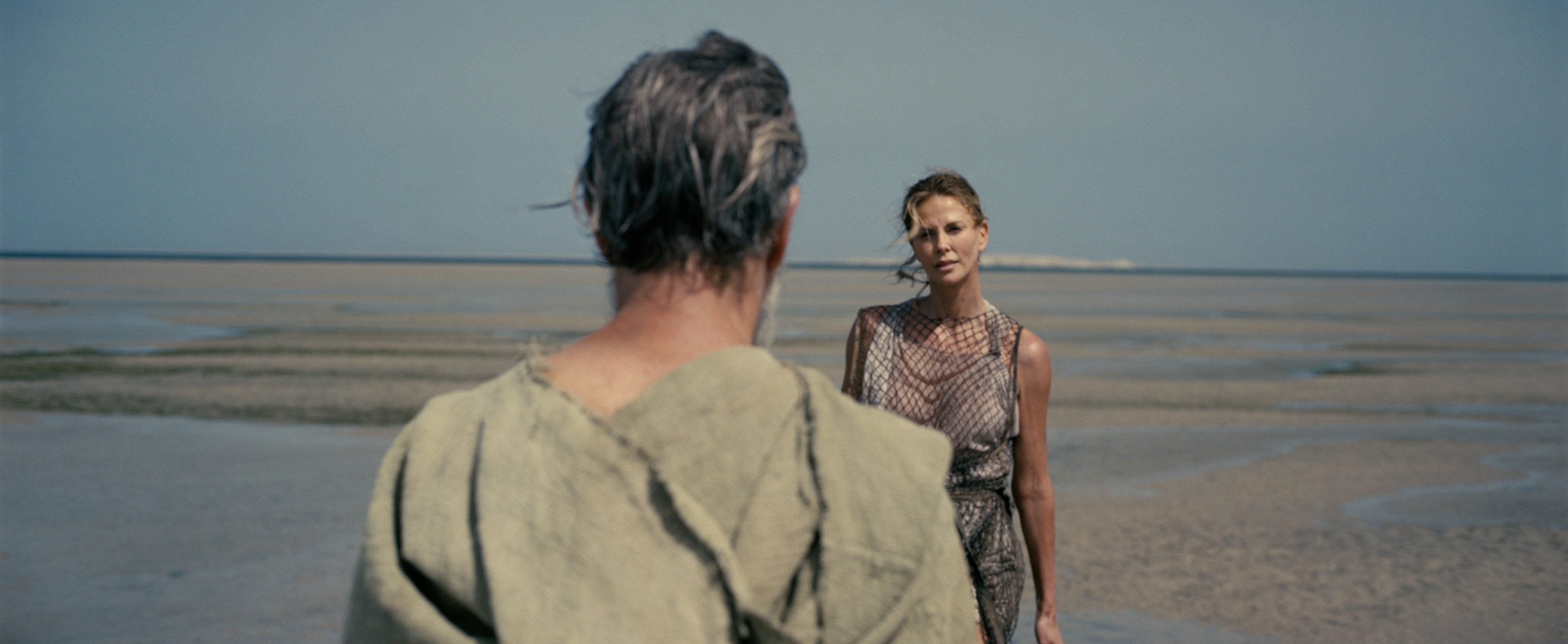
Some of the specific performances deserve credit the discourse hasn’t given them. Travis Scott’s brief turn as the bard at the opening worked better than I expected. It’s paced against the music in a way that actually sets a poetic tone more than stacking the cast for its own sake. Leguizamo is quietly one of the best things in the movie. Samantha Morton’s Circe is the one performance that feels like it belongs to a Greek myth. Robert Pattinson has already received his flowers and rightly so; his Antinous is slimy in a controlled, villainous way that makes the character’s cowardice less cartoonish and more menacing. On the other hand, the Calypso material is where the film loses momentum every time it’s on screen. The performance there isn’t compelling, and those scenes drag despite Charlize Theron being given plenty of backstory to work with. Nolan was clearly preoccupied with making sure the audience understood that this was Odysseus’s failed attempt at escapism, and he further drives that point home with way too much exposition. Hathaway gives what’s probably her strongest performance in years, which isn’t saying much. With a face so visibly worked-on that it shrinks a lot of her range, she struggles to showcase Penelope’s emotional turmoil with precision, but she had some good moments. Holland is the weak link. Some mix of his own skillset (or lack thereof) as an actor and a script that doesn’t give him much, though I’ve never liked much of his work generally, so weigh that accordingly. I’m honestly not sure whether the weakness is unintentional miscasting or a deliberate choice to make Telemachus feel like a boy vying for manhood more than the man the text insists he already is; given how the rest of the film handles that arc, I’d guess closer to intentional than people give it credit for. Zendaya is a nothing actress who never does anything noteworthy on screen and there’s nothing more that needs to be said about that, I’m tired of her. Lupita Nyong’o playing both Helen of Troy and Clytemnestra wasn’t as egregious as I anticipated when it’s revealed that her characters were nagging, conniving women who just want their husbands dead. Funnily enough, this was the more glaring diversity hire and she couldn’t have come across more uncivilized. Jon Bernthal played Jon Bernthal, as always. Ellen/Elliot Page was the clear sore thumb, I know it, you know it, everyone knows it. No amount of intelligent writing and dialogue could mask that she’s a terrible actor and unconvincing man, which paradoxically made for a believable(?) Sinon within the context of this film.
Benny Safdie as Agamemnon is the best example of a performance undone by the film’s structure. He’s introduced as physically imposing, all scale and menace, and then the underworld sequence deliberately shrinks him into something small and pathetic when we hear Safdie’s whiny voice. The thematic intent is clear: humanize the warlord, strip the myth down to the man. But it costs the character work the rest of the film spent building up, and the thematic point and the craft cost are seriously in tension here, not resolved.
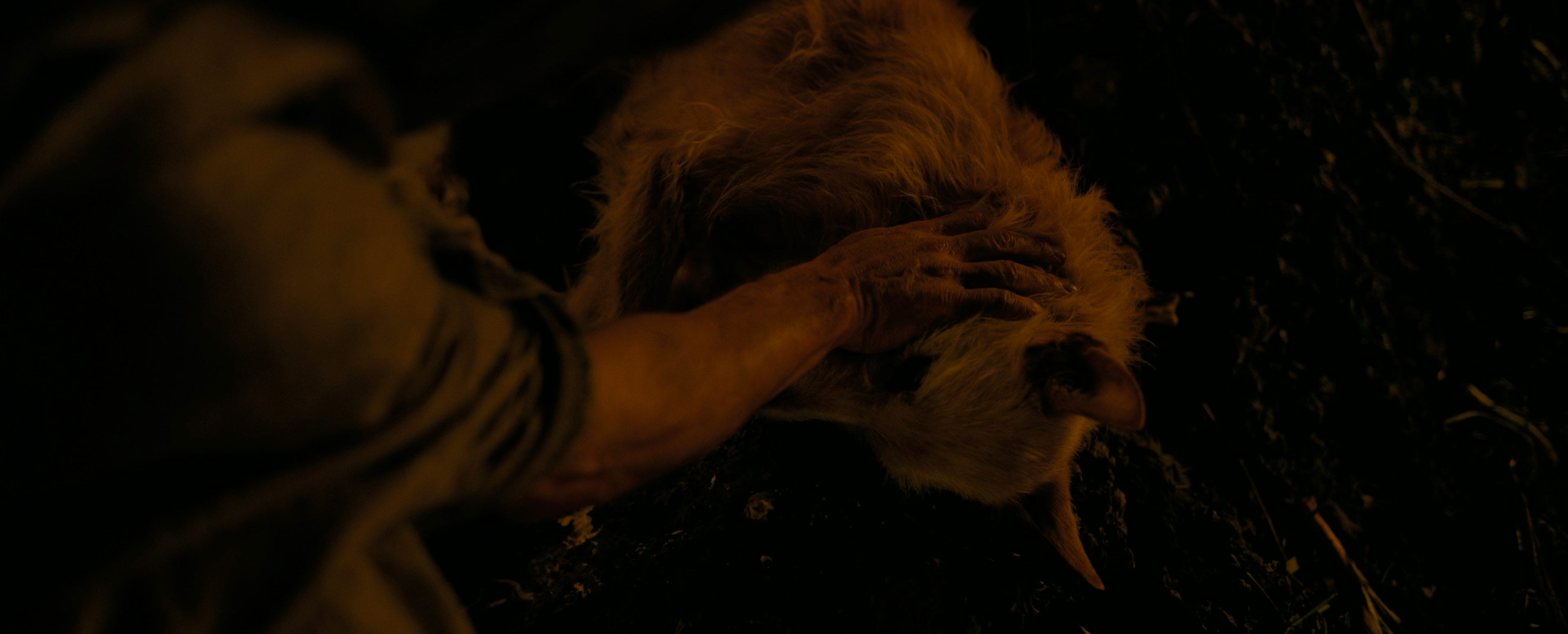
Why Mid Is Worse Than Bad
The film’s problems are structural and technical, and are detrimental no matter what your politics are. But there’s a bigger claim worth making first. This movie being largely mid, by almost every metric, is more dangerous than it would be if it were simply bad like many on the right are claiming. A legitimately bad movie starts an argument about art. Its failures are visible, and visible failures sharpen everyone’s sense of what actually works and why. An expensive, competent, mid movie does something worse. It borrows just enough of the real thing to circumvent that conversation before it starts.
A lot of what’s on screen is prestige cinema built out of nostalgia and expectation in lieu of anything new, like Nolan so ardently claimed he was striving for. The much-praised “CiNeMaTiC” shots aren’t fresh vision so much as a highly refined impression of one. Nolan’s signature moves are all present and accounted for: the massive scale, the low-frequency soundtrack doing the emotional work an orchestral score used to do, the stark lighting. Those cues don’t function as depth here so much as they function as familiarity, and familiarity gets mistaken, in the moment, for intimacy. You can feel that approach fail the second you look directly at a shot and lose the mood around it, which is exactly what happens in the scenes below. Sadly, the only scale you end up feeling most of the time is the size of the IMAX screen
The clearest way I can put it is that too much of this movie feels laid at the characters’ feet when it should be earned by them. Troy is the best example. The shot of them finally entering the city is sick, there’s so much aura in that single image of Agammemnon approaching, but it’s basically the only moment in the whole siege sequence that has any weight. The city itself is shown as drab and strangely small once they’re inside it, and the framing never sells the idea that this was an invasion, a decade-long siege ending in violence. It feels like it is being given to the audience when it should’ve been taken by the soldiers. That’s the pattern for the rest of the voyage, too. Island after island along the Mediterranean gets a few minutes of setup before the plot event happens and they’re back on the ship. Nothing gets to feel lived-in. The world doesn’t get built so much as visited. Ironically that has been a longstanding complaint of the original text and the one departure I think everyone would’ve welcomed.
A lot of that comes down to camera choices that keep announcing themselves instead of helping immerse you into the story. The early scene between Penelope and Telemachus arguing cuts between their faces almost every few seconds, and that rhythm repeats throughout the film well past the point where it feels like a stylistic flex to remind the audience how much stuff was shot on IMAX. I understand the physical constraint driving some of it. An IMAX camera can only run for a few minutes before it needs to be reloaded, which forces a certain amount of cutting whether you want it or not, but there was clearly room to do more interesting things within that limit than this much face-to-face shot-reverse-shot. The shallow depth of field throughout is its own separate issue, and one I’ll admit is more of a personal taste thing. It’s a distinctly modern look, and I miss the deeper, more perceptible focus that defines a lot of the classic films this is supposedly in conversation with. Combine that with Nolan’s now-signature color grading, which I’m not going to pretend I hate but am quickly getting tired of, and every landscape in the film starts to blur into the last one. It’s not a disaster on its own. Paired with the pacing, though, it’s another reason nothing in this movie gets to feel lived-in, we are simply passing through.
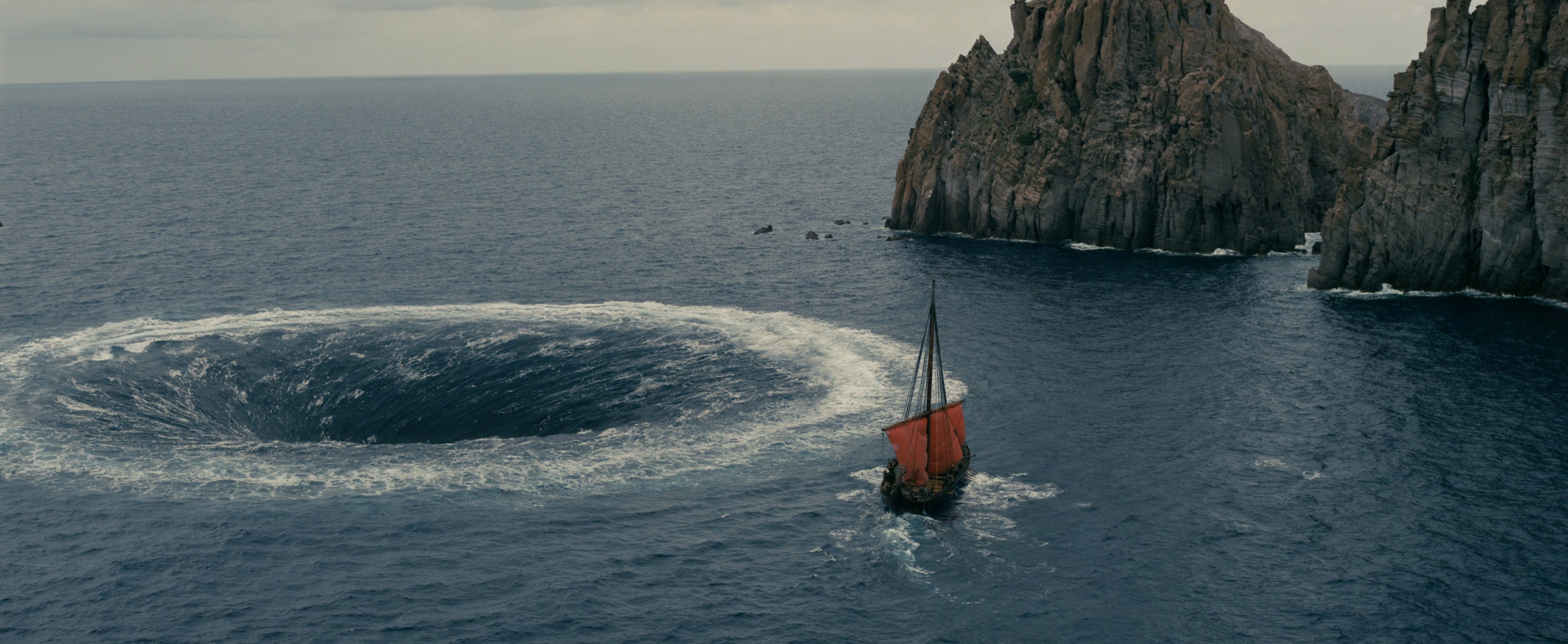
You can watch the pacing problem do serious damage in the film’s big scenes. The Cyclops sequence has, on paper, the most horror-movie potential in the entire film: practical cave, practical monster, seriously unsettling sound design, especially in the moment his eye gets put out. But the pacing manages to feel rushed and dragging at the same time. The geography of the cave doesn’t track. You’re shown exactly where the Cyclops is coming from, and yet somehow the soldiers are in a panic trying to find him. Crew members get plucked out and eaten, he goes to sleep, they escape the next day, they’re back to fighting almost immediately, and there’s no accumulation, no dread being built and paid off, just a sequence of things happening in order. Nothing drives this point home more than when Odysseus fires an arrow lazily, and out of spite, just to accelerate the tension once more and drive the action back to the sea. Scylla has the same problem. We’re told, in dialogue, that people are about to die and it matters, then it happens so fast the crew members feel expendable, there’s no true sense of loss. I could yap more about the monster design but this review is already dragging so I’ll just say Scylla looked boring. The Sirens sequence, to its credit, makes a cleverly novel choice: you never actually hear them and barely see them, only Damon’s face as he screams against the restraints, describing what he’s hearing after the fact. I thought that was a cool way to handle a moment that’s impossible to visualize without cheapening it within the context of the rest of the film, and Damon is doing the heavy lifting here. Unfortunately, he’s the only reason the scene has any weight at all. Again, editing tempo undermines the impact, cutting away from him mid-reaction and back, so even the stronger of the three set pieces still gets neutered.
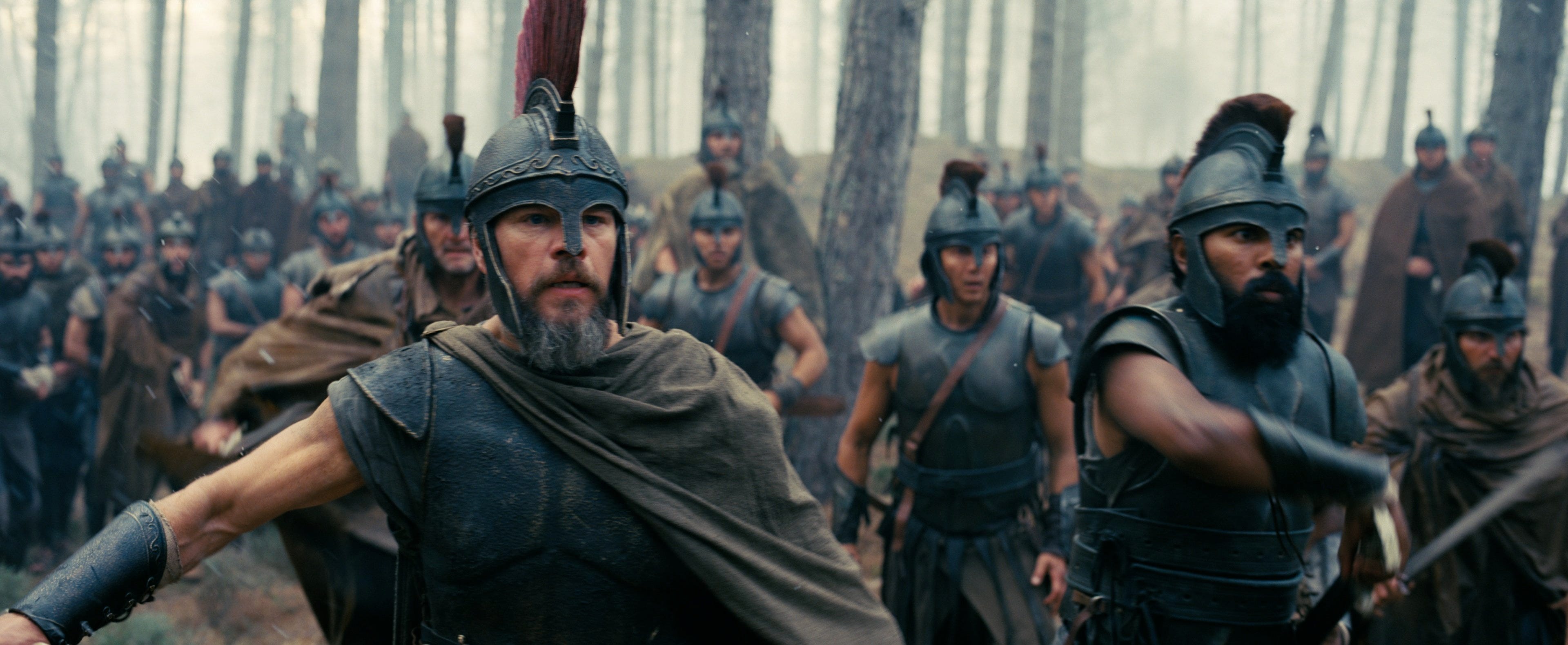
The Laestrygonians merit a separate mention because the failure there is a little different. I actually like the underlying idea: giant, alien people wearing steel in a world that’s supposed to be Bronze Age, a uniquely strange and unsettling image on paper, undermined by costuming (more on that below) and by how the reveal itself is staged. Odysseus and his men walk a short way inland from the shore, run into what looks like a miniaturized child version of one of the giants, and the child screams, at which point the adult giants are suddenly present in the tree line, as though they were there just waiting for the scene to unfold. The fact that they feel like they simply spawned in flattens what should have been one of the more purely frightening detours in the whole voyage. The moving trees used to trap the soldiers are an actually good idea on top of that, a piece of environmental horror this film could have used more of. But the execution undermines itself again once the men realize they’re caught. The film cuts to a series of close-ups on their faces pulling comically exaggerated, goofy expressions of shock, and it drains every ounce of tension the trap should have been building.
The film has the opposite problem whenever a scene lets Nolan show off a practical effect. Circe’s transformation of the crew into pigs is a good idea stretched well past the point where it’s serving the story, lingering the way a demo reel lingers, less “watch what happens to these men” and more “watch how we did this without CGI.” The suitor slaughter at the end has the identical pacing issue: it runs long, and it keeps interrupting its own momentum to showcase choreography when it should be escalating tension. Antinous calling out the room as weapons come down through the ceiling is a strong image the first time you see it, but the sequence drags well past that impact. Damon’s rapid-fire archery, which he reportedly drilled for weeks to get right, looks half-assed on screen, like an actor showing they can do their own stunts. And there’s a moment where Damon fends off the suitors who have encircled him with a full three-hundred-sixty-degree axe swing that screams John Wick, exactly the kind of directorial decision that parades as spectacle at the expense of grounded realism. It’s emblematic of the film’s larger rhythm problem: rushed where it should have lingered, and lingering exactly where it should have moved on. The massive battles and mythic landscapes feel fundamentally small and the small moments completely lack the depth of intimacy. There are no pauses or subtleties to provoke deep reflection or heartfelt emotion. Case in point: the Argus scene at the end did absolutely nothing for me, it felt like the quickest aside possible to tell the audience something sad just happened which is just plain weird given how instrumental it is to Odysseus’s return in both the book and movie.
Ludwig Göransson’s score deserves credit separately, because it’s one of the few places where Nolan’s modernizing instinct pays off. Skipping a traditional orchestra for something stranger and more percussive is a risk with this material, and more often than not it works, giving the film a texture that feels entirely its own. But there are stretches where the score just drones, holding a mood well past the point the scene needs it, and the film doesn’t get room to breathe as a result. It’s an admirable new approach with a major flaw in it, one I’m sure is going nowhere any time soon. The broader sound mix has the more familiar problem. Dialogue getting buried under score and effects, a recurring issue across Nolan’s last several films that shows up here too, distractingly at points. It wasn’t as severe as some made it sound, though, and I suspect much of that is on a theater-by-theater basis.
Armor is another good example of the film being inconsistent in a way that has nothing to do with historicity. Agamemnon’s design works at a distance, real scale, real menace. Everything else falls apart on inspection. The Trojan armor comes off as goofy and papier-mâché-like up close rather than lived-in or dangerous, and the Laestrygonian giants get the same treatment despite an otherwise striking concept. I don’t care about historical accuracy here. Make it look cool and I won’t ask whether it’s textually correct, but even by that “lower” standard, most of the costume department’s work outside of Agamemnon doesn’t stick the landing.
Nolan’s Achilles Heel
Hollywood is Christopher Nolan’s Achilles heel. Achilles doesn’t stop being Achilles because of the heel, the heel is the one vulnerability that comes bundled with the invincibility. Nolan’s version of that trade is both the industry he works inside and the temperament that industry rewards in him: the name-brand marketing, the IMAX contracts, the whole apparatus that makes it possible for a studio to hand one director $250 million to adapt a three-thousand-year-old poem in the first place, married to exactly the kind of precise, literal-minded engineer who thrives inside that apparatus. Take away the marketing built on his name, and you also take away the reason anyone let him make this movie at all.
There’s a deeper problem sitting underneath everything above, and it’s less about the industry Nolan works in than about Nolan himself. His actual ceiling might not be Hollywood at all. It might be that he’s an engineer, not a myth-maker. He has enormous technical command: procedural precision, an unmatched sense of physical scale, true mastery over how a shot gets built. What he doesn’t have, at least on this evidence, is much taste for whimsy, or wonder, or the kind of thing that only works if it’s allowed to stay unexplained.
Myth needs a director willing to let the unknowable stay unknowable. Nolan can’t quite do it, he’s constitutionally literal, and it shows every time the film brushes against something genuinely divine or magical, from Athena’s demotion to a hallucination born of trauma, to Calypso getting stripped of godhood and turned into an ordinary sidepiece, to Circe’s pig transformation getting more screen time as a technical showcase than as myth. Everywhere the story asks for enchantment, Nolan reaches for an explanation, and the epic quietly stops being a story about men contending with gods and starts being a very well-produced showcase of a director’s talent in place of the protagonist, an ironic inversion of who should be suffering from their own ego.
That’s not really a contradiction of the Hollywood point, either. A studio this size selects for a director like that. Precision, control, and a legible, marketable version of “craft” are exactly what get you the budget and the distribution in the first place. Convincing mystery is a much harder pitch in a boardroom than a technically dazzling explanation is. It is clear now that Nolan’s temperament and the machine he’s working inside were never actually in tension. It was born out of the same instinct.
So the ambiguity running through the film is the cost of attempting this, for this audience, right now. Nolan is trying to meet a distracted, ideologically polarized, endlessly online audience where it actually lives, using the only tools built for an audience like that. And there’s a cap on how many genuinely new angles are left in a story this old anyway. Rome already rewrote Odysseus. The medieval church rewrote him. Dante rewrote him. Every culture that needed something specific from that story took what it needed and left the rest. Nolan’s version is just the one built by, and for, whatever this particular era actually is: contested, overstimulated, immune to consensus, more interested in fighting to lay claim on a movie than sitting quietly with one. That’s not an excuse for the pacing, the clunky choreography, or the world that never quite gets built. Those are legitimate failures and they’d be failures in any era. But the ambiguity itself, the thing both sides are attempting to weaponize, is the surest sign of Nolan’s competency and proof that myths are still doing their job in 2026 instead of playing passively on a screen. I might even go so far as to say he’s not the director we deserved, but the director we needed.